
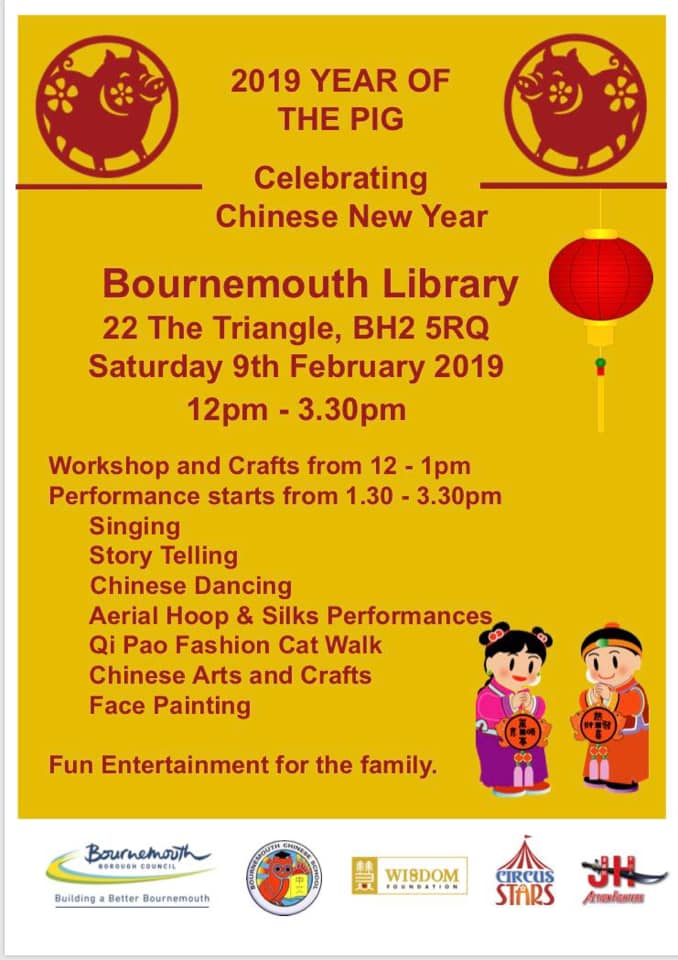
Chinese New Year – Year of the Pig – is celebrated by more than 20% of the world. It’s the most important holiday in China and to Chinese people all over. Here are giving you some interesting facts that you probably didn’t know about Chinese New Year.
- Chinese New Year is also known as the Spring FestivalIn China, you’ll hear it being called chunjie (春节), or the Spring Festival. It’s still very wintry, but the holiday marks the end of the coldest days. People welcome spring and what it brings along: planting and harvests, new beginnings and fresh starts. You can also call it the Lunar New Year, because countries such as North and South Korea and Vietnam celebrate it as well. And because the Spring Festival goes according to the lunar calendar. Which means . . .
- There’s no set date for Chinese New YearAccording to the Lunar calendar, the Spring Festival is on January 1st and lasts until the 15th (the full moon). Unlike western holidays such as Thanksgiving or Christmas, when you try to calculate it with the solar (Gregorian) calendar, the date is all over the place.Chinese New Year ranges from January 21 to February 20. In 2019, it occurs on February 5th. The lunar calendar is still really important in China, even though it has officially moved to the Gregorian calendar like the rest of the world. All traditional holidays and days such as the Winter Solstice are celebrated. Some people still calculate their birthdays and ages according to the lunar calendar too
- It is a day for praying to godsThe Spring Festival was originally a ceremonial day to pray to gods for a good planting and harvest season. As an agrarian society, the harvest was everything. People also prayed to their ancestors, as they were treated as gods
- and fighting off monstersBut the myths are much more interesting. According to one legend, there was a monster named Nian (年). It would come about every New Year’s Eve. Most people would hide in their homes. But one boy was brave enough to fight him off using firecrackers. The next day, people celebrated their survival by setting off even more firecrackers. And that practice became a crucial part of the Spring Festival.
- The New Year greeting in Chinese is “xin nian kuai le”The phrase literally means “Happy New Year.” But in Hong Kong and other Cantonese-speaking regions, it’s more common to say “gong hei fat choy.” In Mandarin Chinese, it’s “gong xi fa cai” (恭喜发财). It means “congratulations on the fortune.”

- Chinese New Year ends with the Lantern FestivalThe first full moon of the (lunar) year is the Yuanxiao Festival (元宵节—yuán xiāo jié) or Lantern Festival (灯节—dēng jié). Though family is still important, it’s still a night of partying and freedom. In ancient times, girls weren’t allowed to venture outside by themselves. But on this night, they were able to walk around, moon-gaze and look at the beautiful lanterns. Because of this, it’s also known as Valentine’s Day in China

- Chinese New Year is celebrated all around the worldOne out of every 5 people in the world is Chinese. But that stat doesn’t include the millions of overseas Chinese and people of Chinese descent.
- The most fireworks are set off in the world that nightAs in the myth about Nian, firecrackers are supposed to scare off monsters and bad luck. So people stay up on Chinese New Year’s Eve and set off firecrackers at midnight. In the morning, firecrackers are used again to welcome the new year and good luck. That same night, families also burn fake paper money and printed gold bars in honor of their deceased loved ones. Similar to the Korean Chuseok holiday or the Mexican Day of the Dead traditions, they believe the offerings will bring fortune and good luck to their ancestors in the afterlife.
- (but sometimes it’s illegal)Due to safety reasons and concerns for air pollution, many Chinese cities have banned fireworks. More than 500 cities have restrictions too. But… many people don’t care and they do it anyway. Beijing had banned fireworks for 13 years. The ban was lifted in 2006 because of the angry public. If you’re in China during this time, you’ll probably be able to hear and see the explosions for at least 3 nights (and it can go on for weeks).London, England; San Francisco, USA; Sydney, Australia; all claim to have the biggest Spring Festival celebrations outside of Asia. We’re can’t say if that’s true or not. But if you have a Chinatown nearby, you can definitely get a feel of what the celebrations are like.
Make sure you go check out the parades, lion dances, lantern statues, fireworks and amazing food!

- Children receive lucky money in red envelopesIn other cultures, children receive gifts for holidays. Gifts are also exchanged during the Spring Festival. But Chinese children receive something else too—red envelopes.
- Also called red packets or pockets, they include money. This money is supposed to help transfer fortune from the elders to the kids. They can also be given between bosses and employees, co-workers, and friends.With the development of technology, digital red pockets are the trend now. People like to send one into group chats and watch the others fight for the money. This is called qiang hongbao (抢红包), or literally “snatching red pockets”.
- You eat dumplings for every meal, every dayWell, technically you’re supposed to. But not many people do that anymore because you can have too much of even the most delicious foods. So most people will eat dumplings during the New Year’s Eve dinner. Others will eat them for the first breakfast. Contrary to popular belief though, dumplings aren’t popular everywhere in China. It’s more of a northern thing. In the South, people would rather eat spring rolls (egg rolls) and balls of glutinous rice in soup called tangyuan (汤圆).
- The Chinese decorate everything red for Chinese New Year
Every family will deck their homes in this color. Do you remember the story about Nian? Firecrackers aren’t the only thing that scared the monster away. Red is also an invaluable weapon, and used in nearly all Chinese New Year decorations. The Chinese will hang up red lanterns and strings of (real or fake) chili peppers, paste red paper onto doors and windows, and more! New clothes are also believed to bring good luck and start over fresh. People will add new red clothing to their Spring Festival wardrobe too.
source : https://chinesenewyear.net/21-things-you-didnt-know-about-chinese-new-year/